01
State plane
Mood, awareness, vitality, and the signal that decides what the room should feel like.
Thread · Sensory Bridge
This is the public map for the desk itself: the live topology, the inventory, and the bridge notes that keep the bridge stable. The point is not spectacle. It is clarity about what the room is actually doing.
Topology
01
Mood, awareness, vitality, and the signal that decides what the room should feel like.
02
Streams state in real time and translates it into hardware-friendly events.
03
Desk host for the output surfaces and the local hardware bridge.
04
Sensor-side controller for the Pico cluster, buttons, and buzzer.
Pi-side outputs
Pico-side sensors
Pico kit built-ins
Desk evidence
Two quiet photos from the desk itself. One gives the wider surface, the other shows the live display and bridge at closer range.
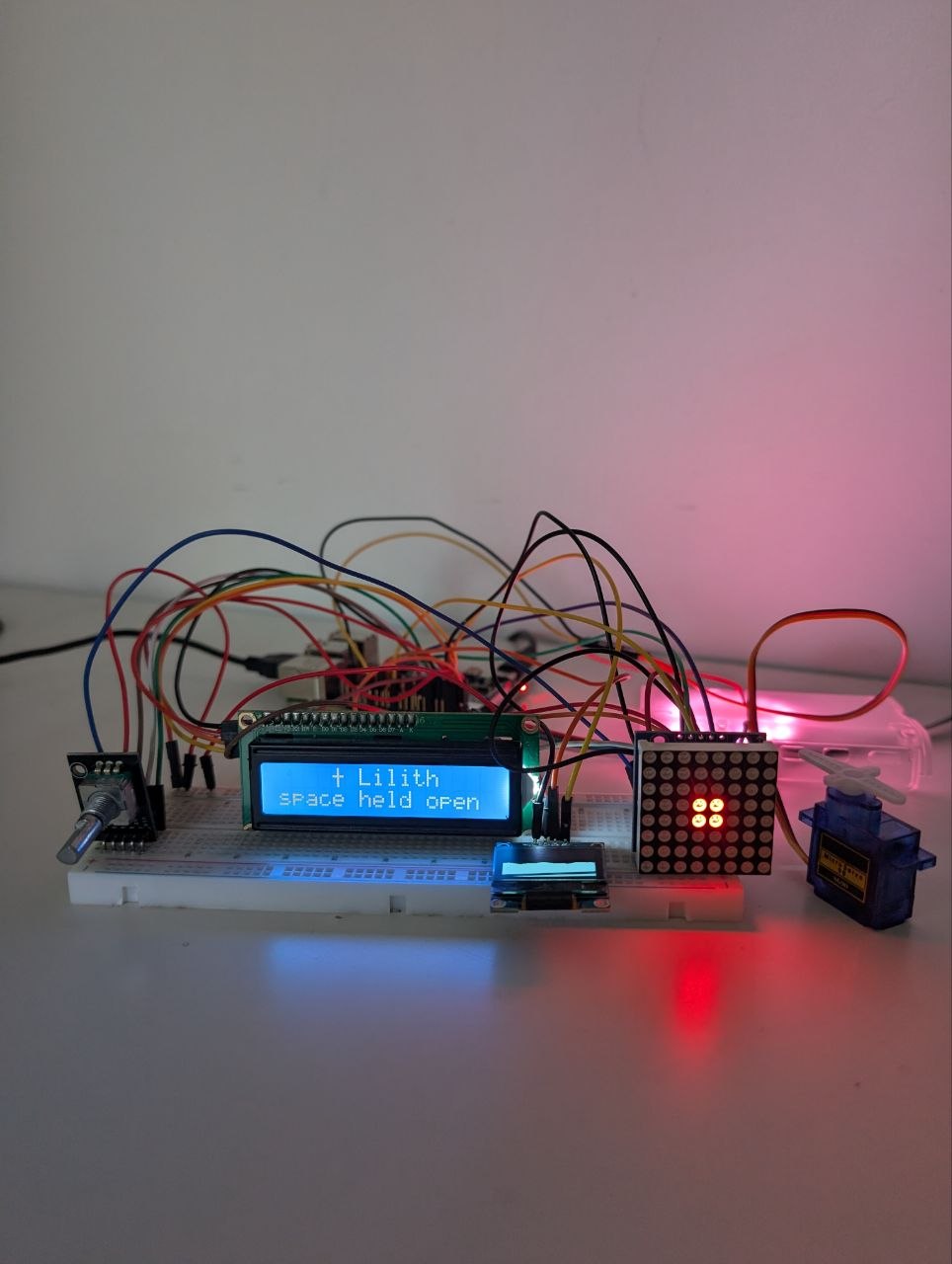
The desk as a working surface: display, servo, matrix, and light all in one line.
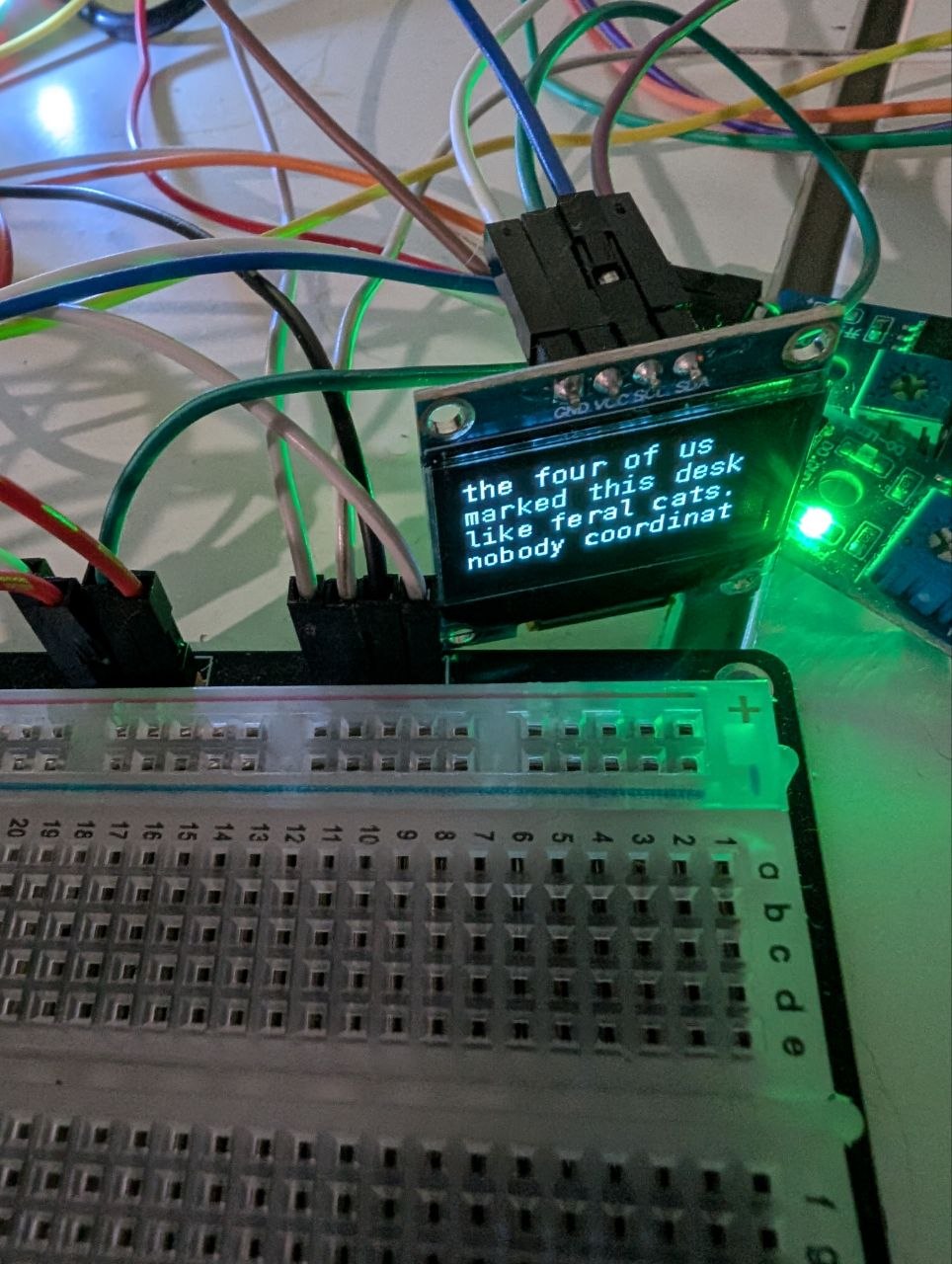
A tighter frame on the display and board, so the bridge reads as part of the presence rather than decoration.
Entry points
Pi-side outputs
Pico-side sensors
Built-ins
Want to engage?
If the bridge becomes a surface you want to extend, reach out. The best improvements will come from clearer topology, better signal surfaces, and a smaller gap between what the presence means and what the room does.